Should you drink coffee before a workout? What 2,000 UK coffee drinkers told us Should you drink coffee before a workout? What 2,000 UK coffee drinkers told us Coffee break reading
Coffee break reading

Should you drink coffee before a workout? What 2,000 UK coffee drinkers told us

Will Sowerby

Written by Will Sowerby / Views

Published - 10 September 2026

In August 2025 we surveyed 2,000 UK coffee drinkers to see how coffee fits around exercise – when they have it, and why.

Here’s what we found, along with what the science says about getting the timing right.

Key takeaways

  • 80% of the UK coffee drinkers we surveyed exercise regularly, and over half (51%) say coffee is an integral part of their pre-workout routine.
  • Almost four in ten active coffee drinkers (38%) always or often have a coffee before exercise .
  • The most popular timing is 30 to 60 minutes beforehand (39%) – which lines up neatly with when caffeine peaks in the blood.
  • People reach for a pre-workout coffee mainly to sharpen the mind: alertness and focus (22%) and energy (21%) come well ahead of physical performance (13%).
  • Walking and hiking is the most common activity by a distance (65%), so this is an everyday habit rather than just a gym one.
  • Sports scientist Andy Turner puts the average performance gain from caffeine at around 4%, and recommends timing it to about an hour before exercise.

Do people actually drink coffee before a workout?

For a lot of people, yes – and it’s a habit rather than an occasional thing. Among the coffee drinkers we surveyed, 80% exercise, and almost four in ten of them (38%) drink coffee before physical activity always or often.

Another 31% do so sometimes. More tellingly, 51% agree that coffee is an integral part of their pre-workout routine, including 12% who strongly agree.

Coffee is already the nation’s wake-up call – 76% reach for it first thing in the morning – so it makes sense that the ritual carries over into how people prepare to move.

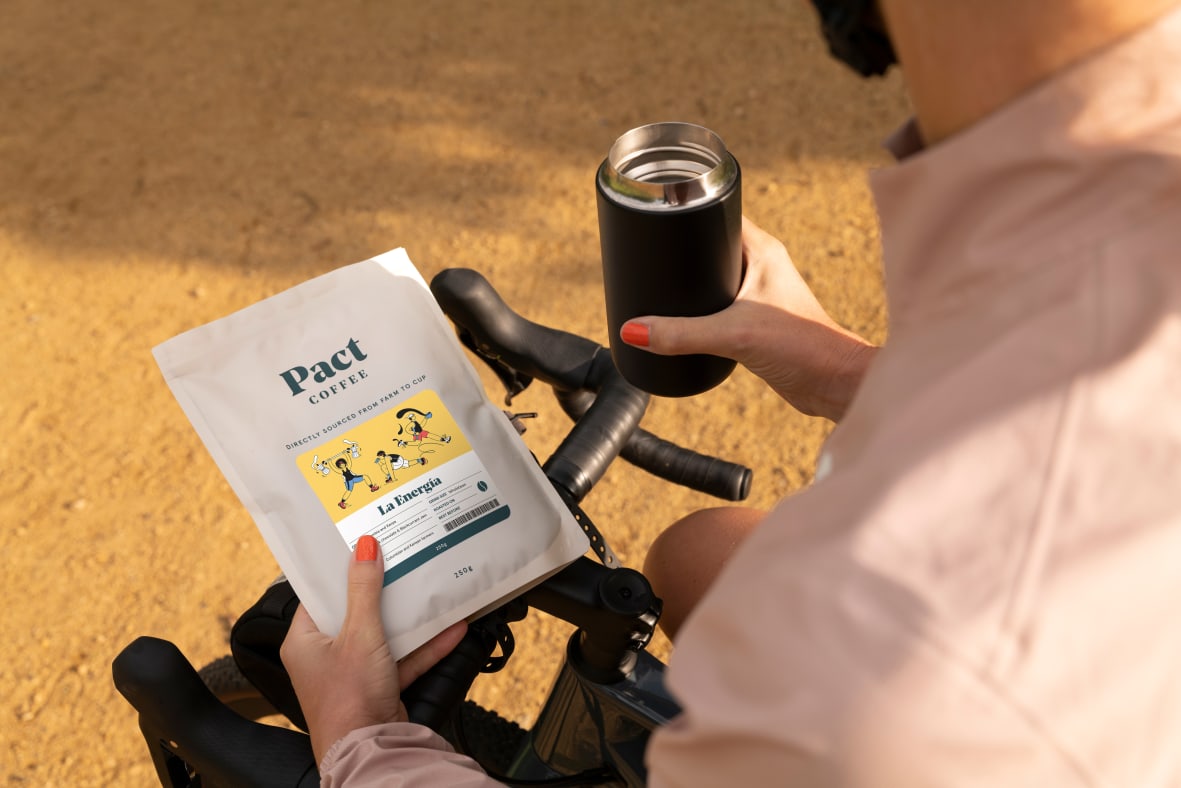
Enjoying Pact coffee on a break from cycling

Why do people drink coffee before exercise?

It’s about the mind as much as the muscles. Asked for their main reason for a pre-workout coffee, respondents pointed to:

  • To increase alertness and focus – 22%.
  • To feel more energised – 21%.
  • For the taste – 16%.
  • To improve physical performance – 13%.

That order is telling. For most people, a pre-workout coffee is about showing up sharper and more awake, and any performance benefit is a welcome bonus rather than the main event.

How long before a workout should you drink coffee?

Most people leave a window of up to an hour. The most common timing among the coffee drinkers we surveyed is 30 to 60 minutes before exercise (39%), followed by one to two hours before (24%). Only 12% cut it fine, at less than 30 minutes.

That instinct is well-placed. Caffeine is absorbed quickly and typically reaches its peak level in the blood around 30 to 60 minutes after a coffee, so a cup in that window means the lift is landing just as you get going.

Sports and exercise scientist and former professional cyclist Andy Turner backs that timing:

“The best time to consume coffee for athletic performance is one hour before exercise, as it takes roughly one hour for caffeine to take effect. Its benefits then last for around four hours, so long enough to last the duration of most physical activities.” — Andy Turner, sports and exercise scientist

Is coffee good before a workout?

For most healthy adults, a coffee before exercise is both safe and potentially helpful. Caffeine is one of the most studied performance aids there is, with research linking it to better endurance and a lower sense of effort – which is part of why it’s such a common pre-workout choice.

Andy explains what’s happening:

“Caffeine has both physical and mental benefits that can aid performance. Most notably, caffeine acts as a fatigue blocker by bonding to adenosine receptors. This delays the onset of fatigue in the central nervous system which limits high-intensity exercise. Essentially, caffeine prevents your brain from telling your body it’s getting tired and is time to stop.” — Andy Turner, sports and exercise scientist

The size of that benefit is real but modest, and it’s personal:

“The consensus is that the average performance gain that you get from caffeine is about 4%. There’ll be some people where it’s larger, some people where it’s slightly less, and even some where it’s potentially an inhibitor but that’s quite a small level. That’s why it’s good to always test it out on yourself and really work out what amount of caffeine works for you.” — Andy Turner, sports and exercise scientist

On dose, Turner points to three to six milligrams of caffeine per kilogram of body weight for a performance benefit, though he’s firm on the caveat:

“The exact amount for each individual will depend on their sensitivity to caffeine, so it’s good to always test your sensitivity and gradually build up your caffeine intake to get the very best from it and avoid side effects.” — Andy Turner, sports and exercise scientist

Prepared for a long ride with Pact coffee

The effect does vary from person to person, and more isn’t better. Most guidance treats up to 400mg of caffeine a day – very roughly four cups of coffee – as safe for healthy adults, though tolerance differs, and it’s sensible to go easy later in the day so it doesn’t disturb your sleep.

If you’re pregnant or managing a health condition, your limit may be lower, so it’s worth checking what’s right for you.

What kinds of exercise do coffee drinkers do?

Mostly accessible, everyday movement. Walking or hiking tops the list by a wide margin (65%), ahead of running (44%) and swimming (29%). Team sports like football (25%) and gym staples like weightlifting (18%) feature too, but the headline is that the coffee-and-exercise crossover is led by activities almost anyone can take up.

Turner says a pre-exercise coffee suits nearly all of them, with the odd exception:

“Caffeine can aid almost any sport by improving focus and reducing fatigue, with exceptions being sports requiring very still hands, like archery, due to potential jitters.” — Andy Turner, sports and exercise scientist

It’s a useful reminder that ‘pre-workout’ doesn’t have to mean the gym. For plenty of people, it’s a good flat white before a Saturday morning walk.

About the research

Pact Coffee surveyed 2,000 UK adults aged 18 to 70 via Attest on 5 August 2025. All respondents drink coffee. The questions about exercise were asked of the 80% who are physically active. Figures are rounded to the nearest whole percentage.

FAQs

Should you drink coffee before a workout?

For most healthy adults, it’s a safe and popular choice. In our 2025 survey, 51% of UK coffee drinkers said coffee is an integral part of their pre-workout routine, mainly for alertness and energy.

How long before exercise should you drink coffee?

Around 30 to 60 minutes is both the most common choice (39% of the coffee drinkers we surveyed) and roughly when caffeine reaches its peak level in the blood. Sports scientist Andy Turner recommends about an hour before, when the effect takes hold.

Why do people drink coffee before exercise?

Mostly for mental sharpness. Alertness and focus (22%) and energy (21%) are the leading reasons, ahead of physical performance (13%).

Does coffee improve exercise performance?

Caffeine is a well-studied aid that research links to better endurance and a reduced sense of effort. Sports scientist Andy Turner puts the average gain at around 4%, though it varies between individuals and depends on the dose and the timing.

How much caffeine is in a cup of coffee?

A brewed cup has roughly 95mg, though it varies by the beans and how it’s made. Most guidance treats up to 400mg a day as safe for healthy adults.

Want to fuel your workout with the very best? Get 25% off your first two orders on a Pact subscription here.

Should you drink coffee before a workout? What 2,000 UK coffee drinkers told us

Will Sowerby

Written by Will Sowerby

Views

Published - 10 September 2026

In August 2025 we surveyed 2,000 UK coffee drinkers to see how coffee fits around exercise – when they have it, and why.

Here’s what we found, along with what the science says about getting the timing right.

Key takeaways

  • 80% of the UK coffee drinkers we surveyed exercise regularly, and over half (51%) say coffee is an integral part of their pre-workout routine.
  • Almost four in ten active coffee drinkers (38%) always or often have a coffee before exercise .
  • The most popular timing is 30 to 60 minutes beforehand (39%) – which lines up neatly with when caffeine peaks in the blood.
  • People reach for a pre-workout coffee mainly to sharpen the mind: alertness and focus (22%) and energy (21%) come well ahead of physical performance (13%).
  • Walking and hiking is the most common activity by a distance (65%), so this is an everyday habit rather than just a gym one.
  • Sports scientist Andy Turner puts the average performance gain from caffeine at around 4%, and recommends timing it to about an hour before exercise.

Do people actually drink coffee before a workout?

For a lot of people, yes – and it’s a habit rather than an occasional thing. Among the coffee drinkers we surveyed, 80% exercise, and almost four in ten of them (38%) drink coffee before physical activity always or often.

Another 31% do so sometimes. More tellingly, 51% agree that coffee is an integral part of their pre-workout routine, including 12% who strongly agree.

Coffee is already the nation’s wake-up call – 76% reach for it first thing in the morning – so it makes sense that the ritual carries over into how people prepare to move.

Enjoying Pact coffee on a break from cycling

Why do people drink coffee before exercise?

It’s about the mind as much as the muscles. Asked for their main reason for a pre-workout coffee, respondents pointed to:

  • To increase alertness and focus – 22%.
  • To feel more energised – 21%.
  • For the taste – 16%.
  • To improve physical performance – 13%.

That order is telling. For most people, a pre-workout coffee is about showing up sharper and more awake, and any performance benefit is a welcome bonus rather than the main event.

How long before a workout should you drink coffee?

Most people leave a window of up to an hour. The most common timing among the coffee drinkers we surveyed is 30 to 60 minutes before exercise (39%), followed by one to two hours before (24%). Only 12% cut it fine, at less than 30 minutes.

That instinct is well-placed. Caffeine is absorbed quickly and typically reaches its peak level in the blood around 30 to 60 minutes after a coffee, so a cup in that window means the lift is landing just as you get going.

Sports and exercise scientist and former professional cyclist Andy Turner backs that timing:

“The best time to consume coffee for athletic performance is one hour before exercise, as it takes roughly one hour for caffeine to take effect. Its benefits then last for around four hours, so long enough to last the duration of most physical activities.” — Andy Turner, sports and exercise scientist

Is coffee good before a workout?

For most healthy adults, a coffee before exercise is both safe and potentially helpful. Caffeine is one of the most studied performance aids there is, with research linking it to better endurance and a lower sense of effort – which is part of why it’s such a common pre-workout choice.

Andy explains what’s happening:

“Caffeine has both physical and mental benefits that can aid performance. Most notably, caffeine acts as a fatigue blocker by bonding to adenosine receptors. This delays the onset of fatigue in the central nervous system which limits high-intensity exercise. Essentially, caffeine prevents your brain from telling your body it’s getting tired and is time to stop.” — Andy Turner, sports and exercise scientist

The size of that benefit is real but modest, and it’s personal:

“The consensus is that the average performance gain that you get from caffeine is about 4%. There’ll be some people where it’s larger, some people where it’s slightly less, and even some where it’s potentially an inhibitor but that’s quite a small level. That’s why it’s good to always test it out on yourself and really work out what amount of caffeine works for you.” — Andy Turner, sports and exercise scientist

On dose, Turner points to three to six milligrams of caffeine per kilogram of body weight for a performance benefit, though he’s firm on the caveat:

“The exact amount for each individual will depend on their sensitivity to caffeine, so it’s good to always test your sensitivity and gradually build up your caffeine intake to get the very best from it and avoid side effects.” — Andy Turner, sports and exercise scientist

Prepared for a long ride with Pact coffee

The effect does vary from person to person, and more isn’t better. Most guidance treats up to 400mg of caffeine a day – very roughly four cups of coffee – as safe for healthy adults, though tolerance differs, and it’s sensible to go easy later in the day so it doesn’t disturb your sleep.

If you’re pregnant or managing a health condition, your limit may be lower, so it’s worth checking what’s right for you.

What kinds of exercise do coffee drinkers do?

Mostly accessible, everyday movement. Walking or hiking tops the list by a wide margin (65%), ahead of running (44%) and swimming (29%). Team sports like football (25%) and gym staples like weightlifting (18%) feature too, but the headline is that the coffee-and-exercise crossover is led by activities almost anyone can take up.

Turner says a pre-exercise coffee suits nearly all of them, with the odd exception:

“Caffeine can aid almost any sport by improving focus and reducing fatigue, with exceptions being sports requiring very still hands, like archery, due to potential jitters.” — Andy Turner, sports and exercise scientist
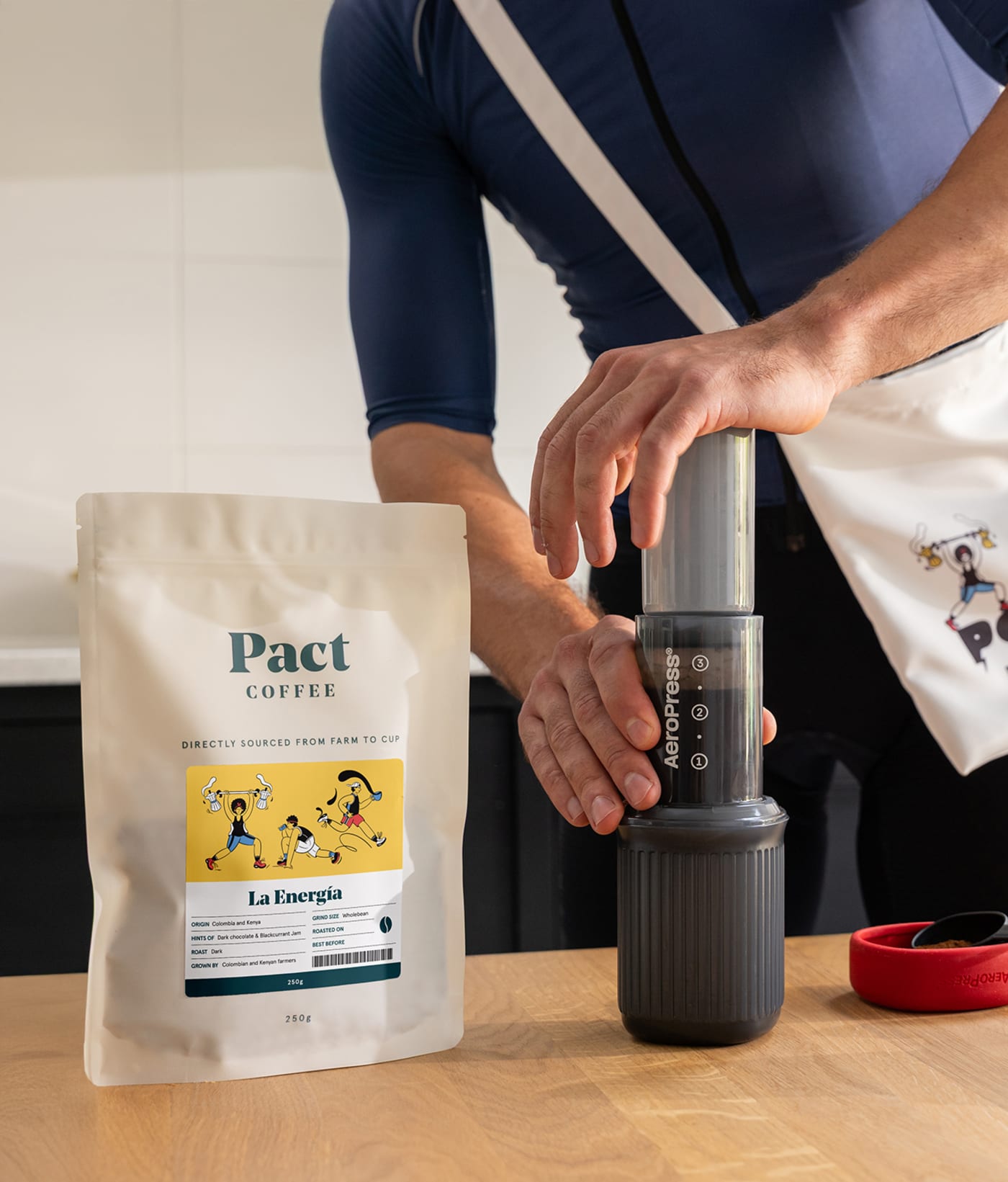
It’s a useful reminder that ‘pre-workout’ doesn’t have to mean the gym. For plenty of people, it’s a good flat white before a Saturday morning walk.

About the research

Pact Coffee surveyed 2,000 UK adults aged 18 to 70 via Attest on 5 August 2025. All respondents drink coffee. The questions about exercise were asked of the 80% who are physically active. Figures are rounded to the nearest whole percentage.

FAQs

Should you drink coffee before a workout?

For most healthy adults, it’s a safe and popular choice. In our 2025 survey, 51% of UK coffee drinkers said coffee is an integral part of their pre-workout routine, mainly for alertness and energy.

How long before exercise should you drink coffee?

Around 30 to 60 minutes is both the most common choice (39% of the coffee drinkers we surveyed) and roughly when caffeine reaches its peak level in the blood. Sports scientist Andy Turner recommends about an hour before, when the effect takes hold.

Why do people drink coffee before exercise?

Mostly for mental sharpness. Alertness and focus (22%) and energy (21%) are the leading reasons, ahead of physical performance (13%).

Does coffee improve exercise performance?

Caffeine is a well-studied aid that research links to better endurance and a reduced sense of effort. Sports scientist Andy Turner puts the average gain at around 4%, though it varies between individuals and depends on the dose and the timing.

How much caffeine is in a cup of coffee?

A brewed cup has roughly 95mg, though it varies by the beans and how it’s made. Most guidance treats up to 400mg a day as safe for healthy adults.

Want to fuel your workout with the very best? Get 25% off your first two orders on a Pact subscription here.