Why do people drink decaf? What 1,000 UK drinkers told us Why do people drink decaf? What 1,000 UK drinkers told us Coffee industry news
Coffee industry news

Why do people drink decaf? What 1,000 UK drinkers told us

Will Sowerby

Written by Will Sowerby / Views

Published - 10 September 2026

In May 2025 we surveyed 1,000 UK decaf drinkers to understand what’s really behind the switch. The answers point to a category that’s growing – previously held back by quality and perception rather than a lack of demand. Here’s what we found.

Key takeaways

  • 75% of UK decaf drinkers have been drinking it for more than a year, so decaf is a lasting choice rather than a passing trial.
  • Sleep is the number one reason people reach for decaf, cited by 58%, followed by caffeine-related side effects at 47%.
  • 72% would drink more decaf if better-quality options were available – a clear signal that quality, not caffeine, is the real barrier.
  • 86% would consider ‘low-caff’ coffee, pointing to real appetite for a middle ground between full-caffeine and fully decaffeinated.
  • Most people can find decaf easily enough, but the quality gap suggests the opportunity is in better decaf, not simply more of it.

Why do people drink decaf coffee?

Among the UK decaf drinkers we surveyed, sleep and health lead the way. Asked to select every reason that applied to them, respondents pointed to:

  • Sleep quality – 58%.
  • Caffeine-related side effects, such as jitters or a racing heart – 47%.
  • Taste – 38%.
  • Digestive issues – 23%.

For most people, decaf isn’t about avoiding coffee – it’s about keeping the experience and the flavour while leaving the caffeine behind.

That’s a meaningfully different motivation from simply ‘cutting down’, and it shapes what these drinkers want from a cup.

Decaf House Blend
Decaf House Blend

How long do people stick with decaf?

Three-quarters (75%) of the drinkers we surveyed have been drinking decaf for more than a year, and 43% have done so for over three years. Just 11% were relative newcomers of less than six months.

That longevity suggests decaf has moved well beyond the once-a-year ‘giving up caffeine’ resolution and into a permanent place in people’s cupboards.

Is it easy to find good-quality decaf?

Mostly yes, but not for everyone. Around two-thirds (66%) of respondents find it moderately or very easy to track down good decaf, while 22% still find it difficult. Views on choice are similar: 68% think there’s enough decaf to choose from, and 32% don’t.

So availability isn’t the whole story. Plenty of people can find a decaf easily enough – the real question is whether what they find is any good.

Would people drink more decaf if the quality improved?

This is where the research gets interesting. 72% of decaf drinkers say they’d be more likely to drink decaf if better-quality options were available, and 44% would be ‘much more likely’. Only 9% would be less likely.

In other words, the ceiling on decaf is perceived quality, rather than demand. Improve the beans and the roast, and there’s a lot of extra demand waiting to be met.

quotes
Decaf drinkers have historically been sold a large amount of stale, low-grade coffee given a false lease of life through the decaffeination process.
Will Corby, Director of Coffee, Pact
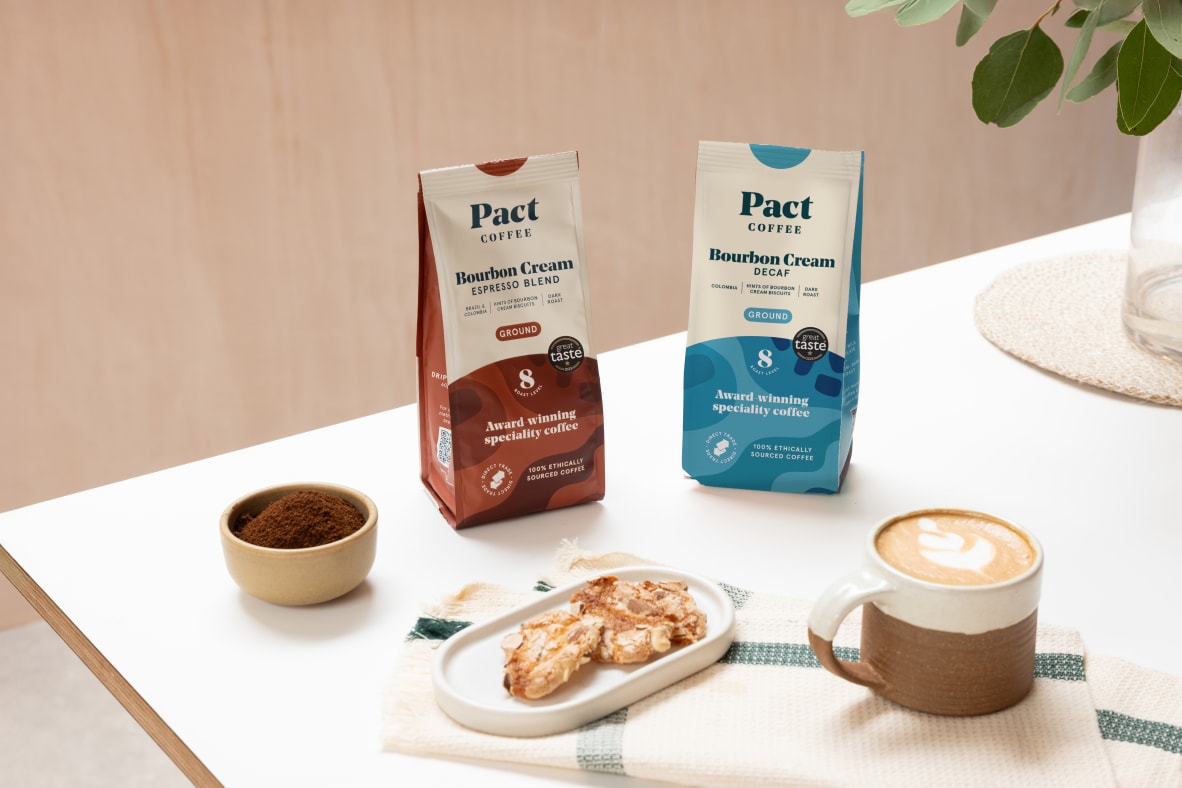
Pact Bourbon Cream and Bourbon Cream Decaf, both available in Waitrose

What is low-caff coffee, and do people want it?

‘Low-caff’ coffee sits between regular and decaf – it keeps a small amount of caffeine rather than removing almost all of it. And there’s clear appetite for it: 86% of the decaf drinkers we surveyed said they’d consider low-caff coffee.

That openness hints at a more nuanced future for the category, where people dial their caffeine up or down to suit the time of day rather than choosing between two extremes.

What does the research tell us about the future of decaf?

Put together, the picture is of a category being held back by perception rather than demand. People are loyal to decaf, they’re choosing it for considered reasons, and they’re ready to drink more of it – as long as the quality is there.

For roasters, the brief is simple: treat decaf with the same care as any other speciality coffee, and you’ll have plenty of very appreciative customers.

About the research

Pact Coffee surveyed 1,000 UK adults aged 18 to 64 via Attest on 2 May 2025. All respondents had bought decaffeinated coffee – ground, whole bean, or instant – in the previous six months. Figures are rounded to the nearest whole percentage.

FAQs

Why do most people drink decaf coffee?

Sleep quality is the most common reason, cited by 58% of UK decaf drinkers in our 2025 survey, followed by caffeine-related side effects at 47%. Taste (38%) and digestion (23%) also play a part.

Is decaf coffee actually caffeine-free?

No. Decaffeination removes at least 97% of the caffeine, but a small amount always remains – a cup of decaf typically contains just 2–7mg, compared with around 95mg in a regular coffee. Coffee with a deliberately higher, though still reduced, level is often called ‘low-caff’.

Do people drink decaf long-term?

Yes. 75% of the UK decaf drinkers we surveyed had been drinking it for over a year, and 43% for more than three years.

Would people drink more decaf if it tasted better?

For most, yes. 72% said they’d be more likely to drink decaf if better-quality options were available.

What is low-caff coffee?

Low-caff coffee keeps a small amount of caffeine rather than removing almost all of it, offering a middle ground between regular and decaf. In our survey, 86% of decaf drinkers said they’d consider it.

Fancy a better decaf?

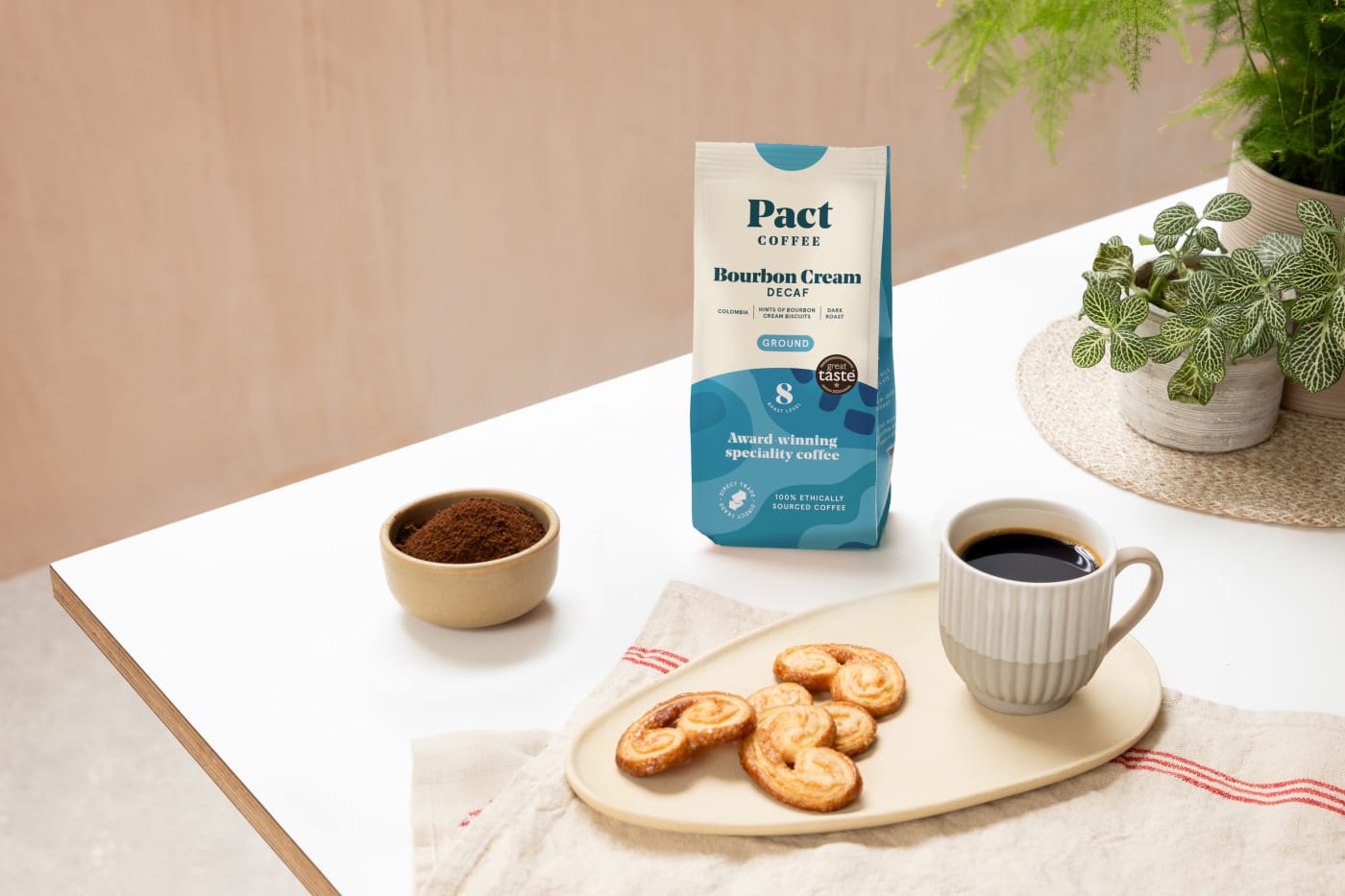
If the research rings true and you’ve been hunting for a decaf you’ll genuinely enjoy, you’ll love Bourbon Cream Decaf.

It’s a dark espresso blend from Colombia with a creamy body and hints of bourbon cream biscuit – and it earned a Great Taste award in 2023. You’ll find our 200g bags in the decaf aisle at Waitrose or on Waitrose online.

Why do people drink decaf? What 1,000 UK drinkers told us

Will Sowerby

Written by Will Sowerby

Views

Published - 10 September 2026

In May 2025 we surveyed 1,000 UK decaf drinkers to understand what’s really behind the switch. The answers point to a category that’s growing – previously held back by quality and perception rather than a lack of demand. Here’s what we found.

Key takeaways

  • 75% of UK decaf drinkers have been drinking it for more than a year, so decaf is a lasting choice rather than a passing trial.
  • Sleep is the number one reason people reach for decaf, cited by 58%, followed by caffeine-related side effects at 47%.
  • 72% would drink more decaf if better-quality options were available – a clear signal that quality, not caffeine, is the real barrier.
  • 86% would consider ‘low-caff’ coffee, pointing to real appetite for a middle ground between full-caffeine and fully decaffeinated.
  • Most people can find decaf easily enough, but the quality gap suggests the opportunity is in better decaf, not simply more of it.

Why do people drink decaf coffee?

Among the UK decaf drinkers we surveyed, sleep and health lead the way. Asked to select every reason that applied to them, respondents pointed to:

  • Sleep quality – 58%.
  • Caffeine-related side effects, such as jitters or a racing heart – 47%.
  • Taste – 38%.
  • Digestive issues – 23%.

For most people, decaf isn’t about avoiding coffee – it’s about keeping the experience and the flavour while leaving the caffeine behind.

That’s a meaningfully different motivation from simply ‘cutting down’, and it shapes what these drinkers want from a cup.

Decaf House Blend
Decaf House Blend

How long do people stick with decaf?

Three-quarters (75%) of the drinkers we surveyed have been drinking decaf for more than a year, and 43% have done so for over three years. Just 11% were relative newcomers of less than six months.

That longevity suggests decaf has moved well beyond the once-a-year ‘giving up caffeine’ resolution and into a permanent place in people’s cupboards.

Is it easy to find good-quality decaf?

Mostly yes, but not for everyone. Around two-thirds (66%) of respondents find it moderately or very easy to track down good decaf, while 22% still find it difficult. Views on choice are similar: 68% think there’s enough decaf to choose from, and 32% don’t.

So availability isn’t the whole story. Plenty of people can find a decaf easily enough – the real question is whether what they find is any good.

Would people drink more decaf if the quality improved?

This is where the research gets interesting. 72% of decaf drinkers say they’d be more likely to drink decaf if better-quality options were available, and 44% would be ‘much more likely’. Only 9% would be less likely.

In other words, the ceiling on decaf is perceived quality, rather than demand. Improve the beans and the roast, and there’s a lot of extra demand waiting to be met.

quotes
Decaf drinkers have historically been sold a large amount of stale, low-grade coffee given a false lease of life through the decaffeination process.
Will Corby, Director of Coffee, Pact
Pact Bourbon Cream and Bourbon Cream Decaf, both available in Waitrose

What is low-caff coffee, and do people want it?

‘Low-caff’ coffee sits between regular and decaf – it keeps a small amount of caffeine rather than removing almost all of it. And there’s clear appetite for it: 86% of the decaf drinkers we surveyed said they’d consider low-caff coffee.

That openness hints at a more nuanced future for the category, where people dial their caffeine up or down to suit the time of day rather than choosing between two extremes.

What does the research tell us about the future of decaf?

Put together, the picture is of a category being held back by perception rather than demand. People are loyal to decaf, they’re choosing it for considered reasons, and they’re ready to drink more of it – as long as the quality is there.

For roasters, the brief is simple: treat decaf with the same care as any other speciality coffee, and you’ll have plenty of very appreciative customers.

About the research

Pact Coffee surveyed 1,000 UK adults aged 18 to 64 via Attest on 2 May 2025. All respondents had bought decaffeinated coffee – ground, whole bean, or instant – in the previous six months. Figures are rounded to the nearest whole percentage.

FAQs

Why do most people drink decaf coffee?

Sleep quality is the most common reason, cited by 58% of UK decaf drinkers in our 2025 survey, followed by caffeine-related side effects at 47%. Taste (38%) and digestion (23%) also play a part.

Is decaf coffee actually caffeine-free?

No. Decaffeination removes at least 97% of the caffeine, but a small amount always remains – a cup of decaf typically contains just 2–7mg, compared with around 95mg in a regular coffee. Coffee with a deliberately higher, though still reduced, level is often called ‘low-caff’.

Do people drink decaf long-term?

Yes. 75% of the UK decaf drinkers we surveyed had been drinking it for over a year, and 43% for more than three years.

Would people drink more decaf if it tasted better?

For most, yes. 72% said they’d be more likely to drink decaf if better-quality options were available.

What is low-caff coffee?

Low-caff coffee keeps a small amount of caffeine rather than removing almost all of it, offering a middle ground between regular and decaf. In our survey, 86% of decaf drinkers said they’d consider it.

Fancy a better decaf?

If the research rings true and you’ve been hunting for a decaf you’ll genuinely enjoy, you’ll love Bourbon Cream Decaf.

It’s a dark espresso blend from Colombia with a creamy body and hints of bourbon cream biscuit – and it earned a Great Taste award in 2023. You’ll find our 200g bags in the decaf aisle at Waitrose or on Waitrose online.